
Your favourite African artist (and probably your favourite artist outside Africa) has most likely sampled a Fela Kuti song in their music at least once before or taken influence from him. He may have been a musician by job title but seen by many as a freedom fighter as he addressed the wrongdoings of the government of Nigeria and Africa as a whole. Fela Kuti is the blueprint of African music today and here we’ll take a look into his life and legacy.
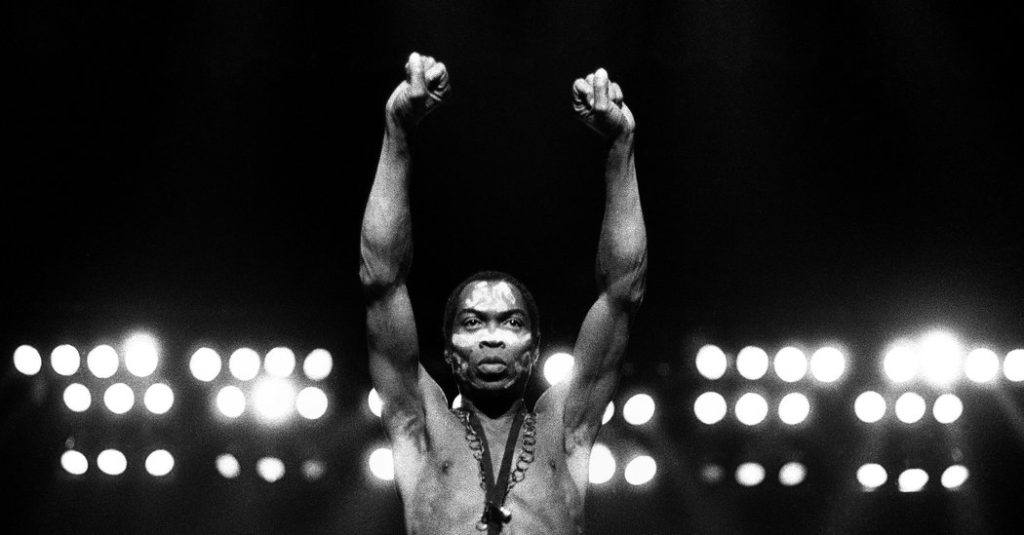
Image: NY Times
Fela Kuti’s Early Days
The “Father of Afrobeat”, Fela Anikulapo Kuti was born Olufela Olusegun Oludotun Ransome-Kuti on 15 October 1938 in Abeokuta, Nigeria. His mother, Funmilayo Ransome-Kuti was a teacher and activist who fought for Nigeria’s independence and freedom. She was associated with Osagyefo Kwame Nkrumah, the first president of Ghana. His father, Israel Ransome-Kuti, was an Anglican preacher and the first president of the Nigerian Union of Teachers. As early as the age of 8, Fela Kuti began to play the piano and drums and later led the school choir. Fela Kuti’s parents insisted he studied medicine, but destiny chose a different course of life. When his father died at age 17, his mother pushed him to pursue an education of some sort. He firstly enrolled on a medicine programme, but he shortly enrolled on a Classical Music course at Trinity College where his knowledge of music further grew.
Music Influences & Style
Fela Kuti took a lot of inspiration from highlife. Highlife is a genre that originated in Ghana as early as the 1900’s, which composes of western instruments including the guitar, horns, trumpets and traditional Akan music along with vocals which often told stories. However, Fela was able to add his own touch to the genre and dug deep into his Nigerian roots and placed greater emphasis on the horns and trumpets. He coined the term ‘highlife jazz’ for his sound. He formed his first band in 1961 who were known as the ‘Koola Lobitos’. He also had his first child, Yeni, in the same year with his wife Remi Taylor who he married a year earlier. His second child, Femi was born in 1962, who carries much of Fela’s legacy today. The Koola Lobitos were highly demanded band for African dance music in London at the time. In 1963, Fela Kuti moved back to Nigeria with his family and alternated between playing with the Koola Lobitos and working as a producer for the National Broadcasting Commission (NBC).
Fela decided to fully focus on his music and later left the NBC. Between 1967 and 1970, Nigeria was engaged in a civil war known as the Biafra War. This period began to shape many of Fela Kuti’s songs. Additionally, his musical reputation was at risk of becoming damaged as Nigerians slowly became detached from his ‘highlife jazz’ sound. He then took a 10-month tour with the Koola Lobitos in the USA, where he met Sandra Izsadore. She introduced him to the ideologies of Malcolm X and other activists, which formed his political viewpoints. This also changed the sound of his music forever. The tour in USA resulted in the birth of a new genre: afrobeat.
As a result of this tour, Fela decided to rebrand by giving his band a new name. Fela’s band was now known as the ‘Africa 70’ and in 1969 he released his first album under this rebrand entitled ‘The 1969 Los Angeles Sessions’. This album also includes the hit song ‘My Lady Frustration’. Him and his entourage were entering shows with 14 vehicles to carry all of them! The afrobeat sound took over Nigeria after this album, which was heavily driven by percussion instruments in the form of drums, horns and African reprises. Lyrically, Fela Kuti was more socially conscious as he emphasises on the social injustices as a result of the decisions of the Nigerian government. In 1970, he changed his middle name to ‘Anikulapo’, which means “He who carries death in his pouch”.
In 1971, Fela Kuti decided to open ‘The Shrine’. This was a nightclub and social space for people to enjoy his music. His music particularly resonated with young people as they were living the realities Fela addressed in his songs. Fela decided to adopt the look of one who resided in an African shrine as he performed with white powder on his face and performed half-naked. During the 1970’s, Fela Kuti’s status grew beyond Africa and attracted fans internationally. In this time, he produced some of his greatest hits including ‘Lady’, ‘Water No Get Enemy’, ‘Expensive S**t’, ‘Teacher Don’t Teach Me Nonsense’ and ‘Zombie’ and many others .
Fela’s controversies
It is no secret that Fela Kuti had many women around him. This led the state authorities to think that Fela Kuti was abducting women around the country and bringing them to his home, resulting in his arrests. In 1978, Fela Kuti married 27 women at once. This was to apparently silence these rumours of abduction, but till today nobody knows the real reason why he did this. According to the CGTN documentary on the life of Fela Kuti, he was arrested approximately 200 times in his music career. He was also arrested for smoking cannabis and addressing certain topics within his music.
Being a voice of the people also got Fela in trouble. In 1977, Fela Kuti was able to influence the masses of Nigeria to rise against the Prime Minster at the time, Olusegun Obasanjo. In response, his army was then sent out to look for the whereabouts of Fela Kuti and targeted his residence, the Kalakuta (where he was also arrested in 1974). Before finding Fela Kuti, they found Fela Kuti’s mother and threw her off a balcony, where she sustained many injuries. She died 14 months later as a result of this incident. When they found Fela, they beat him and cut his body where he had many marks on him. He then recorded the album ‘Coffin of Head of State’, which is described as the most ‘heart-breaking record’ he ever wrote.
In 1979 Fela founded the political party ‘The Movement of the People’ and decided to run for presidency – but was quickly shut down by the authorities. Dede Mabiaku, a saxophonist and friend of Fela Kuti in which he often opened shows for him, believes that Nigeria and Africa as a continent would be a better place because Fela believed that ‘through ideas of enlightened minds that society gains freedom, and he was the only one enlightened enough’. Fela made a song in 1980 entitled ‘I.T.T’ (International Thief Thief), calling out corrupt leaders and businesses.
Fela Kuti’s last major arrest was in September 1984 for ‘smuggling currency’. He was sentenced to 5 years in prison, but after catching the attention of many artists and organisations such as the Amnesty International who called the arrest political, he served 20 months. He also later divorced all his wives, suggesting it led to ‘jealousy’.
The Death and Legacy of Fela
Fela Kuti died on 2nd August 1997 at the age of 58. While it is reported that he died of HIV/AIDS complications, many of his close friends and companions believe that is the Nigerian government that killed him due to the physical violence he endured from the government. Fela’s music lives on today through his family, namely his sons Femi and Seun Kuti. ‘The Shrine’ has been renamed as the ‘New Afrika Shrine’, where it hosts the annual ‘Felabration’ concert festival. Fela renamed his band again as ‘Egypt 80’ as he received great inspiration from ancient Egypt civilisation, and still performs today under the name ‘Seun Kuti & Egypt 80’. His music lives on through the music of modern-day musicians including Wizkid and Burna Boy and many Broadway productions on his life. Fela Kuti, we salute you!
 perspective of j.k.l.